
Kauaʻi Whale Watching Season 2026 (Holoholo’s Expert Guide)
Last updated: February 4, 2026
2026 Kauai Whale Watching Season Fast Facts:
Hawaiʻi’s humpbacks return roughly November through April (peaking January through March). Holoholo recorded the first confirmed whale of the 2025–26 season at 7:00 a.m. on Oct 14, 2025, off Kauaʻi’s west side en route to Niʻihau—marking the season’s kickoff.
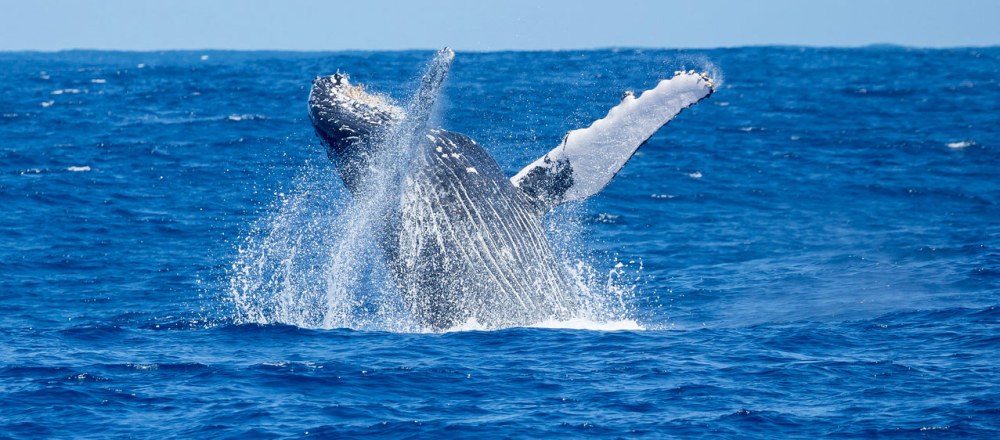
Guidance from NOAA Fisheries requires boats to remain 100 yards from whales (and 1,000 ft for aircraft). Expect breaches, pectoral slaps, tail throws, and — if ocean conditions allow — occasional hydrophone listening. Book early for peak months and morning seas.
After a remarkable comeback from commercial whaling, North Pacific humpback whales are a conservation success … but not invincible. Vessel strikes, entanglement, and disturbance remain real threats. Trained teams in Hawaiʻi respond to entanglements each season (and yes, the saves can be heroic). Holoholo Charters takes our commitment to conservation seriously; compliance with speed and distance rules measurably reduces risk for whales and humans alike.
When is Whale Watching Season in Kauai?
Humpback whales (koholā) migrate up to 5,000 miles from Alaska to Hawaiʻi to mate, calve, and nurse in warm, shallow waters. Around Kauaʻi’, viewing typically runs November through April, with peak abundance January–March. Early arrivals can show up in October, and late-season encounters sometimes linger into May.
| Month | Likelihood | What Often Shows Up |
|---|---|---|
| Late Oct–Nov | 🐋🐋 | First arrivals (often mothers with calves); occasional early breaches. |
| Dec | 🐋🐋🐋 | Consistent sightings; competitive groups begin. |
| Jan–Mar (Peak) | 🐋🐋🐋🐋 | Highest encounter rates; surface activity spikes (breaches, pec slaps, tail throws); more competition pods. |
| Apr–May | 🐋🐋🐋 | Departures; calves stronger and more surface-active before migration north. |
Tip: Morning seas are typically calmer → better visibility/comfort (island-wide boating norm).
Where to See Whales
- From the boat: Na Pali Coast & west/southwest transects to Niʻihau offer broad blue-water visibility and frequent encounters in peak months. (Operational experience + Holoholo logs.)
- From shore (DIY): Kīlauea Lighthouse, Poʻipū shoreline, and high vantage points on south/west aspects (scan for blows and tail slaps).
What Behaviors to Look For
- Breaches (full or partial body launches)
- Pectoral slaps (long white flippers) & tail throws
- Spyhops (vertical, head-out looks)
- Calf & mother pairs (calf practices mini-breaches and tail lifts)
- Singing: Males produce complex songs that evolve through the season; sometimes audible via hydrophone on tours.
Safety, Laws & Ocean Etiquette (Know Before You Go)
- Do not approach within 100 yards of humpbacks by any means; no aircraft within 1,000 ft. It’s the law in Hawaiʻi waters (MMPA).
- Reduce speed around whales; keep clear of travel paths; never “leapfrog” ahead.
- Report injured/entangled marine mammals to the NOAA Marine Wildlife Hotline: 888-256-9840.
Holoholo follows NOAA guidelines and a do-no-harm approach all season.
2025–26 Highlights & Data
- Season kickoff on Kauaʻi: Oct 14, 2025. First sighting of the season spotted by Holoholo Charters on our seven-hour Ni‘ihau Nāpali Super Tour. As seen on Kauai Now, KHON 12 and more.
- Annual Count: Statewide counts routinely tally thousands during monthly winter surveys (e.g., 2,121 whales in Jan 2025’s coordinated count).

Kauai Whale Watching FAQs
When is the best time of day to see whales?
Morning often has the smoothest conditions; peak surface activity occurs throughout the day during high-abundance months.
Do whales approach the boat?
Yes—curiosity happens. You’re still required to keep your distance and avoid altering course to intercept. If a whale surfaces closer than 100 yards, we shift to neutral and wait.
How close can we get?
100 yards minimum by law, period. Drones? Don’t; aircraft must stay 1,000 ft away.
What if we spot an injured or entangled whale?
Your captain is equipped to call 888-256-9840 (or VHF 16). We will not attempt to help — specialized responders will assist.
Are whale sightings guaranteed?
Wildlife is wild. During peak season on kauaʻi, odds are excellent, but no ethical operator guarantees wild animal encounters.
Mahalo for Watching with Respect
Every koholā encounter is a privilege. By following the law, slowing down, and choosing operators who prioritize a commitment to sustainability and conservation, you help ensure humpbacks return to these islands for generations. For volunteer opportunities and community counts, see the Hawaiian Islands Humpback Whale National Marine Sanctuary and Pacific Whale Foundation.
Book an excursion on Holoholo Charters for an encounter with nature you won’t soon forget.